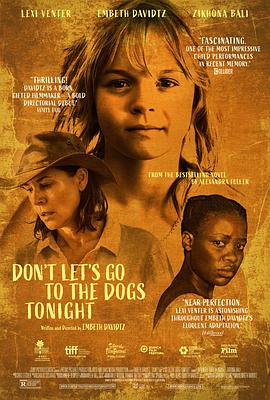
今晚不要让我们去打狗
选集
影片资料
剧情简介
In this adaptation of Alexandra Fuller’s memoir, actor-director Embeth Davitz explores the end of the tenuous truce between white landowners and Black farm workers in the lead-up to the 1980 election in Rhodesia (now Zimbabwe).
热门口碑
原作者现在定居杰克逊霍尔,常年住在蒙古包里。从罗德西亚到怀俄明,冥冥之中自有定数
全自动NinGyou· 1 有用
看完才知道是作者改编了自己的畅销书,但是作为电影拍的无趣了些,像是乔乔兔跟贝尔法斯特的结合。历史稍微有些看头,只是加了孩童视角的滤镜,没办法深究了
竹和· 5 有用
好烂的白人看殖民地帝国夕阳的电影。除了小女孩演的很好,狗很可爱,其它烂得一塌糊涂
HZ
文明的创造者被赶走,就只会剩下一地的蛆虫了
yh· 2 有用
再见 Nicolas
伏笔未有续
注视女性,讲述女性。
金弼生
可爱的bobo小朋友
达叔叔plus
如果爱我你会回头,请回头,please
Lost in Blue· 2 有用
看不下去
姜小白
举重若轻的一部电影,以小朋友的视角来看严肃的事,很有创意
桃夭记
影评摘要
- dogs in South Africa
我是什么时候意识到bobo爱Sarah的呢? 是当她遵循Sarah的部落传下来的传说,插了一根木棍在地上,祈求说,I won’t smoke, I won’t steal, please, bring her back. 我想起曾经看到的一个故事,非常小的片段,来源于波拉尼奥的《2666》 一个德国小男孩在二战快要结束德军溃败之际,跟一个十四五岁的小女孩发生了一夜情——在那个时候物资极度匮乏,很多女孩会选择用自己的身体去换取一些口粮。 他们发生完关系后,这个女孩对这个男孩说,你发誓你一辈子不会忘记我。 男孩说,我发誓我一辈子不会忘记你。 女孩说,你用什么发誓,你凭什么对我发誓? 男孩说,我以我的军队第几师第几旅对你发誓,我不会忘记你。 女孩说,我才不信你那个什么狗屁军队。 男孩说,我以我母亲对你发誓。 女孩说,我不信你母亲 男孩说,我以上帝对你发誓,你信上帝吗? 后面这个男孩又问了好几项东西,女孩全都不信,男孩也疑惑了,那应该以什么发誓呢? 我当时听了觉得很悲伤。 因为在我们现在的时代也是一样的,誓言这个东西已经找不到一个完全有等同价值和重量的东西可以…
— 万事通小姐
- A Powerful Journey Through Memory and Identity
Embeth Davidtz's "Don't Let's Go to the Dogs Tonight" is a masterful cinematic adaptation that brilliantly captures the essence of Alexandra Fuller's acclaimed memoir. This deeply personal and emotionally resonant film takes viewers on an unforgettable journey through the turbulent landscape of Zimbabwe during the 1970s and 1980s, exploring themes of colonialism, identity, and the complexities of belonging. Davidtz, who both directs and stars in the film, demonstrates remarkable skill in bringing this challenging story to life. Her dual role allows for an intimate understanding of the material that permeates every frame. The film doesn't shy away from the uncomfortable truths of white settler life in Africa during a time of immense political and social upheaval. Instead, it confronts these issues head-on with honesty, nuance, and a deep sense of humanity. The cinematography is absolu…
— 爱看电影的茄子
口碑内容来自豆瓣,仅供参考




影片资料
剧情简介
In this adaptation of Alexandra Fuller’s memoir, actor-director Embeth Davitz explores the end of the tenuous truce between white landowners and Black farm workers in the lead-up to the 1980 election in Rhodesia (now Zimbabwe).